Uuencoded File Decoder
This free online tool decodes uuencoded files back to their original format. Uuencoding is a binary-to-text encoding format that was historically used for transmitting binary files through email and Usenet. You can paste uuencoded text, upload a local file, or provide a URL to a remote file. The decoder will automatically detect the file type and provide a download link. For image files, a preview will be displayed. The tool supports both complete uuencoded files (with begin/end markers) and raw uuencoded data streams.
Supported Input Formats
The decoder recognizes two common uuencoding formats:
- Complete format with markers: Files that start with
begin 644 filenameand end withend - Raw uuencoded data: Plain encoded lines starting with the letter 'M' (standard 45-byte lines)
After decoding, you'll see the file's MIME type, extension, and size. For images, a preview will be displayed directly in the browser. For other file types, a download link will be provided.
What is Uuencoding?
Uuencoding (Unix-to-Unix encoding) is a binary-to-text encoding method that was developed in the 1980s for transmitting binary files over text-based communication channels. Before the widespread adoption of MIME and Base64, uuencoding was the primary method for sending binary attachments through email and Usenet newsgroups.
The encoding process converts binary data into printable ASCII characters using a simple algorithm. Each group of 3 bytes (24 bits) is divided into four 6-bit segments, which are then converted to printable characters by adding 32 to each value. This results in characters ranging from space (32) to underscore (95). The first character of each line indicates the number of bytes encoded in that line.
Key Features of Uuencoding
- Simple algorithm: Easy to implement and decode, even manually if necessary
- Wide compatibility: Works with 7-bit ASCII systems that couldn't handle binary data
- Self-describing: Includes filename and file permissions in the begin line
- Error detection: Each line's length character helps identify corruption
While largely superseded by Base64 encoding in modern applications, uuencoding is still occasionally encountered in legacy systems, archived files, and certain Usenet communities. Understanding how to decode uuencoded files remains useful for accessing historical digital content.
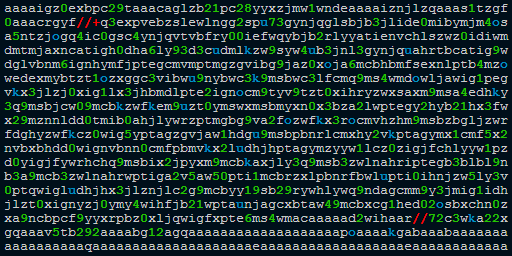 What is "aaaaigz0...my4xmda="?
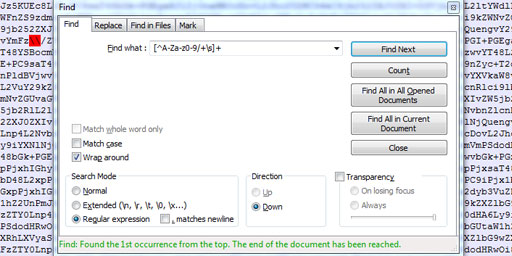 Validate Base64 using Notepad++
 Base64 encryption is a lie
Comments (18)
I hope you enjoy this discussion. In any case, I ask you to join it.